Looking for a transplant center? We can help.

U.S. Transplant Centers Map

Hover a center for details · Scroll to zoom · Drag to pan

Transplant Centers

    Map Key

    Adult / all-ages center
    Pediatric center
    Bone marrow / stem cell (transplant-only)
    More programs = larger dot
    Educational overview · verify programs & services with each center

    Mapping transplant centers…

    After the map and video

    Your next steps in choosing a transplant center

    A center can look close on a map and still be a poor fit for your care, coverage, or support needs. Use this guide to move from a list of possibilities to informed conversations.

    Return to the center map ↗
    A nurse speaking with a patient in a clinic Start with fit, not a ranking
    01 · Make a thoughtful choice

    How to choose a transplant center

    The right center should fit your medical needs and your real life. As the video explains, consider travel, visit frequency, caregiver support, living-donor experience, financial guidance, lodging help, transportation, medications, and education you can revisit at home.

    1. 1
      Build a short list.

      Filter the map by the organ and services you need, then identify two or three realistic programs.

    2. 2
      Check the practical fit.

      Confirm insurance participation, travel expectations, caregiver rules, and local testing options. Ask how the center educates patients, makes information easy to revisit, and demonstrates that the patient experience is a priority.

    3. 3
      Compare experience carefully.

      Use official SRTR data alongside a center conversation; volume alone is not a quality score.

    4. 4
      Write down what matters to you.

      Bring your medical, emotional, cultural, language, financial, and family priorities to each call.

    02 · Prepare for the conversation

    Questions to ask each center

    Ask the same core questions at every program. Take notes and record who gave you the information so your comparison stays grounded.

    01 Evaluation and eligibility +
    • Can I contact your program directly, or do I need a referral?
    • What are your criteria for evaluating and listing someone with my condition?
    • How long does evaluation usually take, and which tests can be completed near home?
    • If I am not accepted, will you explain why and whether reconsideration is possible?
    • If I am not eligible now, will your team help me address barriers—such as smoking cessation, weight management, or another requirement—and explain how I can be reconsidered?
    • Do you evaluate patients before dialysis begins, and do you support preemptive transplant planning or early waitlisting when medically appropriate?
    02 Waiting and transplant practices +
    • How many patients with needs like mine does your program evaluate and transplant?
    • How should I understand your transplant rate, waiting-list outcomes, and survival results?
    • How quickly must I be able to reach the hospital when an organ becomes available?
    • How will I be told if my waiting-list status changes?
    • If I need dialysis, how will you coordinate with my dialysis team, and can you help me identify dialysis centers near the transplant program or where I may need to stay?
    03 Care and support +
    • How often will I need to visit before and after transplant?
    • What will my caregiver need to do, and for how long?
    • Do you offer financial counseling, interpreters, behavioral health, rehabilitation, or support groups?
    • Can your team connect us with help for lodging, transportation, or medication costs?
    • How will you educate me throughout the process, and what do you do to make the patient experience easier to understand and navigate?
    04 Living donation +
    • Does your program perform living kidney or living liver transplants?
    • Who should a potential donor contact, and how is their privacy protected?
    • Does your kidney program participate in paired donation?
    • What education and follow-up do you provide for living donors?
    • Does your center help potential donors identify and apply for financial assistance for eligible travel, lost wages, or dependent-care expenses?
    Enhanced patient education with ValaBright

    Patients working with transplant centers that use ValaBright will have access to state-of-the-art interactive multimedia educational resources delivered automatically to their phones. This makes it easier to understand each stage of the transplant journey, revisit important information at home, prepare better questions, and stay actively connected with the center.

    03 · Know the path ahead

    What happens after you contact a center

    Calling a transplant program does not place you on the national waiting list. It begins a center-specific process of information gathering, evaluation, and shared decision-making.

    i

    Ask how and when the center will notify you of its listing decision. Keep copies of letters, test results, and the names of people you speak with.

    A doctor discussing care with a patient
    1. 01

      First conversation

      The center gathers basic medical and insurance information and explains its referral process.

    2. 02

      Evaluation

      A multidisciplinary team reviews your medical, surgical, psychosocial, financial, and support needs.

    3. 03

      Listing decision

      The program decides whether to list you, request more information, defer, or decline.

    4. 04

      Waiting and readiness

      If listed, you complete ongoing tests, stay reachable, and follow the program’s readiness requirements.

    5. 05

      Transplant and follow-up

      An organ offer begins another review. After transplant, lifelong care and medication follow.

    04 · Understand your options

    Can you be listed at more than one center?

    In many cases, yes

    OPTN policy permits registration at more than one transplant hospital. Each program still decides whether to evaluate and list you, and multiple listing does not guarantee a faster transplant.

    Expect separate requirements Another center may require its own evaluation, testing, and readiness plan.
    Check financial and travel limits Insurance may restrict centers, and added travel or lodging may not be covered.
    Coordinate before transferring Talk with both programs before changing care or asking to transfer waiting time.
    Read HRSA’s official multiple-listing guide
    05 · Explore living donation

    Living donation and the path to transplant

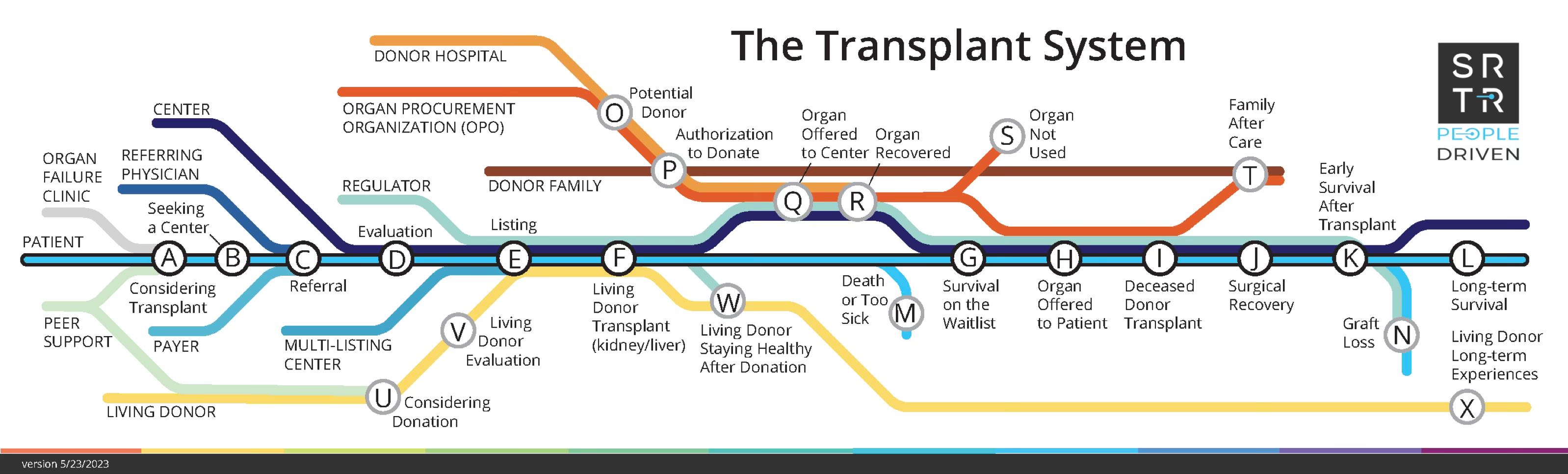
    Living donation can create another transplant option, most commonly for kidney and partial-liver transplantation. The intended recipient and potential donor have different teams, needs, and rights.

    The Transplant System diagram showing patient, living donor, deceased donor, and care pathways
    Image reused from ValaBright’s transplant page; diagram credited within the image to SRTR.
    For recipients

    Ask what options the program offers

    • Living kidney and/or living liver transplantation
    • Kidney paired donation for incompatible pairs
    • A clear way for interested donors to contact the donor team
    • Education that does not place pressure on family or friends
    For centers using ValaBright

    Transplant candidates often need to explain a complex, deeply personal journey to relatives, friends, coworkers, and their wider community. Repeating that story one conversation at a time can be exhausting, and people who want to help may not know what the patient needs or how to respond.

    A transplant center using ValaBright can work directly with the patient to quickly design and launch a personalized website. The site gives the patient one clear, easy-to-share place to tell their story, explain their transplant needs, provide updates, invite potential living donors to learn more, and raise funds for eligible transplant-related expenses.

    With guidance from a trusted transplant center, the website can help the patient communicate more confidently, reach a larger support network, and spend less energy repeatedly managing the same questions.

    Learn about finding a living donor ↗
    For potential donors

    Your health, privacy, and choice come first

    Learning about donation or starting an evaluation does not obligate you to donate. Your decision should be informed, voluntary, and free from pressure.

    You may stop the process at any time.
    Your Independent Living Donor Advocate protects your interests.
    Ask about medical, emotional, financial, work, and insurance effects.
    Financial assistance may be available

    Eligible living donors may receive help from the National Living Donor Assistance Center (NLDAC) with certain non-medical expenses, including travel, lost wages, and dependent-care costs. Ask the donor team about eligibility and apply before covered expenses occur.

    Explore NLDAC financial assistance ↗
    Read the living donation FAQs ↗
    06 · Prepare beyond the procedure

    Plan for care around the transplant

    A transplant affects more than medical appointments. Plan for the people, time, travel, and money that make safe recovery possible.

    A patient reviewing health information on a phone Make one shared plan
    Insurance

    Confirm coverage early

    Ask whether the center is in network and how evaluation, surgery, follow-up, and anti-rejection medicines are covered.

    Travel

    Know the distance

    Plan for evaluation visits, the call for transplant, frequent early follow-up, parking, lodging, and meals.

    Caregiver

    Build your support plan

    Ask who must accompany you, which tasks they will handle, and how long the center requires their help.

    Work and home

    Plan for time away

    Discuss leave, lost income, childcare, eldercare, pet care, and recovery time before an urgent call arrives.

    $

    Before choosing a center, call your insurer

    Ask about network status, prior authorization, travel benefits, transplant pharmacy coverage, deductibles, coinsurance, and any “center of excellence” requirement. Then compare the answers with the center’s financial coordinator.

    07 · Go to the source

    Help from official sources

    Use these independent, federally supported resources to understand transplant policy, compare program data, and find patient guidance.

    Educational guidance, not medical advice.

    ValaBright does not determine transplant or donor eligibility, waiting-list status, organ allocation, or individual treatment. Programs, services, coverage, and data can change. Confirm current information with the transplant center, your insurer, and qualified healthcare professionals. Historical volume and outcome data cannot predict an individual result.